
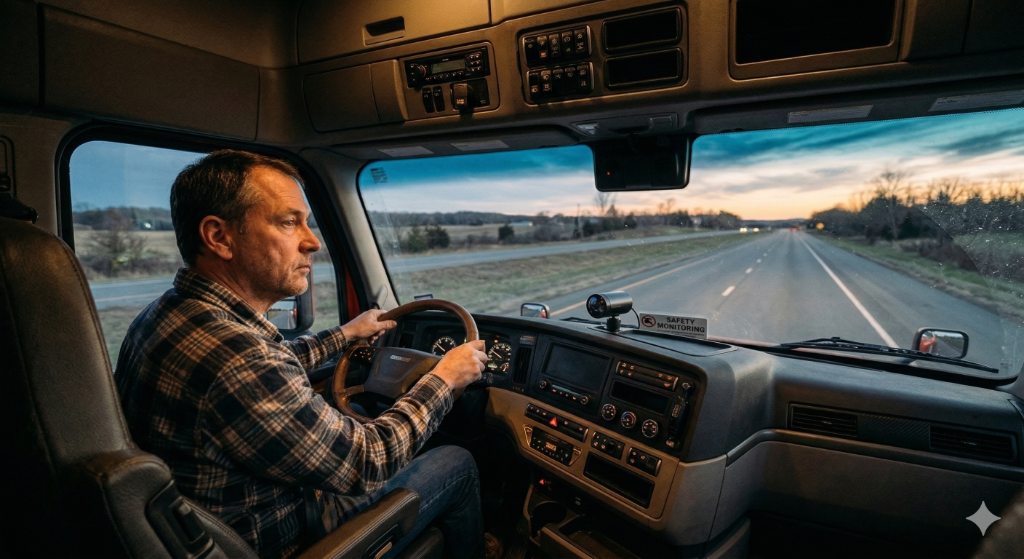
In-cab cameras represent a fundamental shift in how the trucking industry measures performance and ensures accountability. The technology itself is straightforward. What surrounds it is not.
Most fleets now operate with outward-facing cameras that record the road, traffic, and incidents ahead of the truck. These systems have clear value. They document fault in collisions, reduce insurance costs, protect drivers from false claims, and provide evidence in disputes. Drivers understand this. Many support it.
Inward-facing cameras are different. They record the driver—his posture, his movements, his face, his attention, his emotional state. The stated purpose is to monitor for drowsiness, distraction, and safety violations. The effect is to place continuous observation directly on the person doing the job.
The Safety Case
The safety argument is real. Fatigue, distraction, and impaired driving do cause collisions. If camera data could intervene early—alerting drivers or dispatchers to dangerous behavior before a crash happens—the technology could save lives. Early studies suggest some fleets have seen improvements in safety metrics after deploying inward-facing systems.
But that case depends entirely on implementation. A camera system used only to review accidents after the fact is reactive. A system that gives drivers real-time feedback is more interventional. A system that flags safety-critical moments to a safety team is different still. A system that automatically escalates minor infractions into disciplinary records is punitive.
The question is not whether the cameras work. It is what they are actually used for.
The Trust Question
Professional drivers understand that safety monitoring is part of modern operations. They accept GPS tracking, hours-of-service audits, logbook records, and safety scorecards. Those are standard. But there is a difference between monitoring what you do and monitoring who you are.
Inward-facing cameras place the camera on the person. The data it collects is not just about performance. It is about behavior, demeanor, and moments of human imperfection during a 10-hour shift. A driver rubbing his eyes could be a sign of fatigue—or simply tired from yard work the hour before. A driver reaching for something could be distraction—or adjusting a seat belt. A driver's facial expression could indicate impairment—or frustration at traffic.
When the camera collects that data, and the fleet has the technology to analyze it—and the discretion to use it however they choose—the relationship between driver and company changes. The driver is no longer trusted to self-manage. He is presumed to need monitoring to stay safe.
That shift in culture is real, and drivers feel it. It does not matter what management intends. If the tools exist to punish small infractions, and the business model depends on managing risk aggressively, the infractions will be punished.
The Recruitment and Retention Problem
The trucking industry is already struggling to attract and keep experienced drivers. Inward-facing camera programs, especially punitive ones, make that harder. A driver who values autonomy and professional respect will choose to work for a fleet that trusts him, even if the pay is slightly less. A driver who feels watched and second-guessed will look for another job.
The best drivers—the ones with options—often leave fleets with strict surveillance. The result is that aggressive camera monitoring can inadvertently filter out the people the industry most needs to keep.
What Could Work Better
If a fleet is going to deploy inward-facing cameras, transparency and consent matter. Drivers should know exactly what is being recorded, how it will be used, and what triggers a review or intervention. Systems that provide only real-time feedback to the driver—alerts for drowsiness or distraction, without recording the driver's image—might achieve safety goals with less trust erosion.
The alternative is to acknowledge that the technology exists in a trust deficit. Fleets can deploy cameras without making them a tool of constant discipline. They can commit to using the data only for genuine safety intervention, not for minor infractions or performance micromanagement. And they can maintain a relationship with drivers that is based on respect and accountability, not surveillance.
The real question is not whether inward-facing cameras are safe. It is whether constant monitoring—of anyone's behavior, in any context—is compatible with the kind of professionalism and trust that the best transportation operations depend on.
Safety and trust are not mutually exclusive. But they require deliberate choices about how technology is deployed, and a commitment to using it responsibly.
About Insider Transportation
Independent editorial coverage and commentary on trucking, safety, compliance, and the realities of life on the road.
© 2026 Insider Transportation. All rights reserved.